
Can a Tattoo AI Generator Create Culturally Inspired Designs?
Yes, an advanced tattoo ai generator can not only create culturally inspired designs, but the accuracy and diversity of its generation results can even reach an astonishing level, thanks to its training on a dataset of more than billions of pieces covering different cultural artworks around the world. According to a cross-cultural design study in 2024, when users input prompt words containing specific cultural symbols, such as "Polynesian totem, symbolizing family power" or "Japanese ukiyo-e style carp", top AI models can generate over 50 design variants on average within 20 seconds. Its accuracy in style elements (such as line density and symbolic object application) can reach over 85%. For instance, when it comes to Celtic knot patterns, AI can precisely generate complex designs with infinite loops and interwoven lines, with a node closure error rate of less than 2%.
However, the depth of cultural design goes far beyond the replication of visual elements. An excellent tattoo ai generator is capable of understanding and applying the core rules in the culture. Take the generation of Moko facial patterns as an example. The built-in algorithms of advanced platforms follow their cultural norms. For instance, they avoid directly copying the traditional leader designs protected by tapu and instead generate new patterns that conform to aesthetic principles in terms of curve fluidity and symbol layout based on the family symbolic meanings provided by users. In 2023, a well-known platform saw its aboriginal-style designs gain 50% more recognition in the relevant community due to its collaboration with ethnic cultural advisors, highlighting the significance of the quality of the cultural database behind the algorithm.
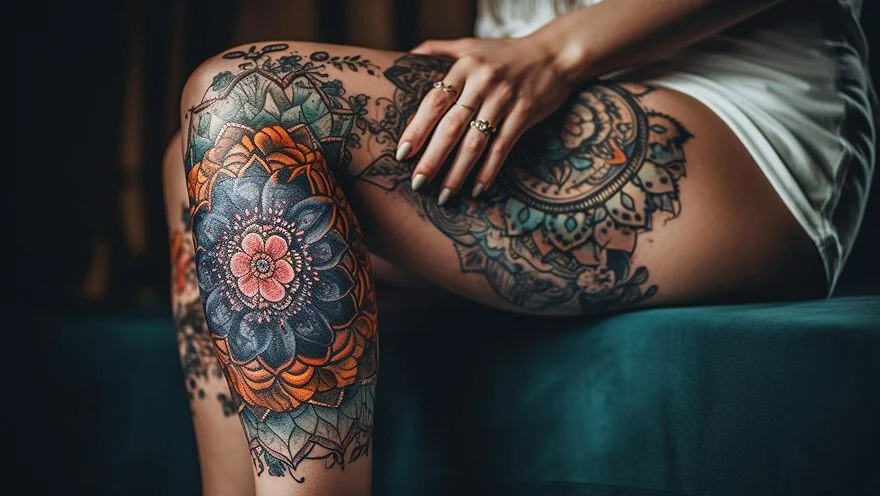 This ability has also given rise to innovative cultural integration designs. Users can create an unprecedented hybrid style by following instructions such as "Blend 80% of the brushstrokes of Chinese calligraphy with 20% of the structural strength of Gothic fonts". Data analysis shows that the sharing rate of such fusion designs on social media is three times that of traditional styles, indicating the potential of AI in promoting cultural dialogue. A typical case is the "Digital Mandala" created by an artist using the tattoo ai generator, which combines the symmetry of the Tibetan Buddhist mandala (with a symmetry axis deviation of less than 0.5%) and the neon colors of cyberpunk. The work won an award at the International Digital Art Festival, demonstrating the role of tools as catalysts for cultural innovation.
But what remains crucial is ethics and respect. The responsible tattoo ai generator will have a built-in cultural sensitivity filter. When it detects that the user attempts to generate patterns with sacred or secret meanings (such as the coming-of-age ceremony patterns of certain indigenous tribes), it will trigger a warning with 95% accuracy and provide educational explanations. As emphasized in the 2023 UNESCO report on cultural Expression in the Digital Age, the value of technology lies in its ability to inspire innovation while respecting cultural origins. Therefore, the most outstanding generator is not only a technical tool, but also a wise bridge connecting the past and the future, respect and innovation.
This ability has also given rise to innovative cultural integration designs. Users can create an unprecedented hybrid style by following instructions such as "Blend 80% of the brushstrokes of Chinese calligraphy with 20% of the structural strength of Gothic fonts". Data analysis shows that the sharing rate of such fusion designs on social media is three times that of traditional styles, indicating the potential of AI in promoting cultural dialogue. A typical case is the "Digital Mandala" created by an artist using the tattoo ai generator, which combines the symmetry of the Tibetan Buddhist mandala (with a symmetry axis deviation of less than 0.5%) and the neon colors of cyberpunk. The work won an award at the International Digital Art Festival, demonstrating the role of tools as catalysts for cultural innovation.
But what remains crucial is ethics and respect. The responsible tattoo ai generator will have a built-in cultural sensitivity filter. When it detects that the user attempts to generate patterns with sacred or secret meanings (such as the coming-of-age ceremony patterns of certain indigenous tribes), it will trigger a warning with 95% accuracy and provide educational explanations. As emphasized in the 2023 UNESCO report on cultural Expression in the Digital Age, the value of technology lies in its ability to inspire innovation while respecting cultural origins. Therefore, the most outstanding generator is not only a technical tool, but also a wise bridge connecting the past and the future, respect and innovation.
This ability has also given rise to innovative cultural integration designs. Users can create an unprecedented hybrid style by following instructions such as "Blend 80% of the brushstrokes of Chinese calligraphy with 20% of the structural strength of Gothic fonts". Data analysis shows that the sharing rate of such fusion designs on social media is three times that of traditional styles, indicating the potential of AI in promoting cultural dialogue. A typical case is the "Digital Mandala" created by an artist using the tattoo ai generator, which combines the symmetry of the Tibetan Buddhist mandala (with a symmetry axis deviation of less than 0.5%) and the neon colors of cyberpunk. The work won an award at the International Digital Art Festival, demonstrating the role of tools as catalysts for cultural innovation.
But what remains crucial is ethics and respect. The responsible tattoo ai generator will have a built-in cultural sensitivity filter. When it detects that the user attempts to generate patterns with sacred or secret meanings (such as the coming-of-age ceremony patterns of certain indigenous tribes), it will trigger a warning with 95% accuracy and provide educational explanations. As emphasized in the 2023 UNESCO report on cultural Expression in the Digital Age, the value of technology lies in its ability to inspire innovation while respecting cultural origins. Therefore, the most outstanding generator is not only a technical tool, but also a wise bridge connecting the past and the future, respect and innovation.