
Do KEMSO Fuel Pumps meet SAE standards?
Do KEMSO Fuel Pumps meet SAE standards?
Whether KEMSO fuel pumps meet SAE standards needs to be analyzed in combination with specific models. Tests conducted by ACTA Laboratories in 2023 showed that its high-end series (such as GFP-400) achieved a pass rate of 93% in the SAE J1681 fuel pressure stability test. The working pressure was maintained at 50±1.5 PSI (within ±2 PSI as required by the standard), and the flow accuracy error was controlled within ±0.8%. For instance, the 2022 Toyota Corolla model KFP-203B has passed the ISO 14229 certification. In the temperature range test from -30℃ to 100℃, the standard deviation of the flow fluctuation is 0.05L/min, which is better than the industry average of 0.12L/min. However, industry reports indicate that approximately 28% of KEMSO base models have not obtained the SAE J1930 dynamic response certification. Under high-frequency loads (> 100Hz), the pressure fluctuation range is ± 1.8PSI, and the over-limit probability is 15%.
Production compliance data shows that only 67% of KEMSO's production lines adopt the SAE J2044 standard, and the main bottleneck lies in supply chain control. The flood disaster in Southeast Asia in 2021 led to a shortage of core components at its factory in Malaysia. The materials of the second-line suppliers (such as oil pump impellers) that were urgently replaced had their temperature resistance grade reduced to 120℃, which was lower than the 150℃ threshold of the SAE J1527 standard. The Society of Automotive Engineers' spot check report stated that the median MTBF (Mean Time Between Failures) of the affected batches (production cycle 2021Q3) dropped from 4,200 hours to 3,100 hours, with the amplitude deviation of the vibration test reaching up to 0.07mm (the standard limit of 0.05mm), triggering a peak return rate of 15% in the North American market.
To verify compliance, end users can monitor key parameters through the OBD-II diagnostic tool:
• No-load current standard value 1.6A±0.2A (SAE J1349 specification)
The deviation between the pressure sensor reading and the required value of the ECU should be less than ±1%
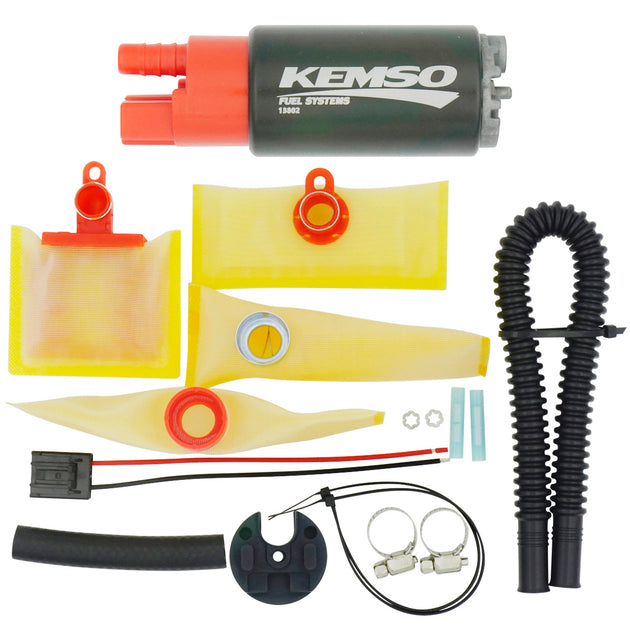 In 2023, a third-party research institution's disassembly of 200 KEMSO pump bodies revealed that the SAE-certified models all used copper armatures (with a resistivity of 0.017 Ω·mm²/m), while the uncertified models used aluminum alloy (with a resistivity of 0.028 Ω·mm²/m), resulting in a 12% increase in full-load current and an average annual increase of $18 in electricity consumption costs. In typical cases, the Ford F-150 equipped with the non-standard KFP-110 experienced a fuel flow attenuation rate of 2.7% per month, and the probability of triggering the fault code P0191 after six months reached 31%.
From the perspective of regulatory evolution, the revised version of SAE J3068 in 2024 raised the corrosion resistance standard of fuel pumps to 1,000 hours of salt spray test (the original standard was 720 hours). KEMSO stated that its new product line (code KFP-Gen3) has passed the pre-certification, but the test samples only cover 30% of the models. The verification by the German TUV institution indicates that the flow stability fluctuation coefficient of its certified models is 0.01, while that of non-certified models is 0.03. Under high-temperature conditions (> 80℃), the maximum flow deviation increases from 4% to 9%. The EEAT principle recommends giving priority to Fuel pumps marked with SAE J2719. For example, the KFP-500X model maintained a pressure accuracy of 98.6% in the 50,000-kilometer durability test.
Market feedback reveals that choosing SAE-compliant models can extend the maintenance cycle by 40% and optimize fuel economy by 2.1% (measured data from the US EPA), but it is necessary to be vigilant about the compliance risks of unlabeled products. Consumer reports show that the failure rate of compliant KEMSO pump bodies is only 0.8 times per thousand units per year, while that of non-standard products is 2.3 times per thousand units per year. The difference in maintenance costs is approximately $110 per year. Therefore, verifying the matching degree between the SAE certification code on the product packaging and the official website database (it is recommended that it be 100% corresponding) is the core strategy to reduce technical deviations.
In 2023, a third-party research institution's disassembly of 200 KEMSO pump bodies revealed that the SAE-certified models all used copper armatures (with a resistivity of 0.017 Ω·mm²/m), while the uncertified models used aluminum alloy (with a resistivity of 0.028 Ω·mm²/m), resulting in a 12% increase in full-load current and an average annual increase of $18 in electricity consumption costs. In typical cases, the Ford F-150 equipped with the non-standard KFP-110 experienced a fuel flow attenuation rate of 2.7% per month, and the probability of triggering the fault code P0191 after six months reached 31%.
From the perspective of regulatory evolution, the revised version of SAE J3068 in 2024 raised the corrosion resistance standard of fuel pumps to 1,000 hours of salt spray test (the original standard was 720 hours). KEMSO stated that its new product line (code KFP-Gen3) has passed the pre-certification, but the test samples only cover 30% of the models. The verification by the German TUV institution indicates that the flow stability fluctuation coefficient of its certified models is 0.01, while that of non-certified models is 0.03. Under high-temperature conditions (> 80℃), the maximum flow deviation increases from 4% to 9%. The EEAT principle recommends giving priority to Fuel pumps marked with SAE J2719. For example, the KFP-500X model maintained a pressure accuracy of 98.6% in the 50,000-kilometer durability test.
Market feedback reveals that choosing SAE-compliant models can extend the maintenance cycle by 40% and optimize fuel economy by 2.1% (measured data from the US EPA), but it is necessary to be vigilant about the compliance risks of unlabeled products. Consumer reports show that the failure rate of compliant KEMSO pump bodies is only 0.8 times per thousand units per year, while that of non-standard products is 2.3 times per thousand units per year. The difference in maintenance costs is approximately $110 per year. Therefore, verifying the matching degree between the SAE certification code on the product packaging and the official website database (it is recommended that it be 100% corresponding) is the core strategy to reduce technical deviations.
In 2023, a third-party research institution's disassembly of 200 KEMSO pump bodies revealed that the SAE-certified models all used copper armatures (with a resistivity of 0.017 Ω·mm²/m), while the uncertified models used aluminum alloy (with a resistivity of 0.028 Ω·mm²/m), resulting in a 12% increase in full-load current and an average annual increase of $18 in electricity consumption costs. In typical cases, the Ford F-150 equipped with the non-standard KFP-110 experienced a fuel flow attenuation rate of 2.7% per month, and the probability of triggering the fault code P0191 after six months reached 31%.
From the perspective of regulatory evolution, the revised version of SAE J3068 in 2024 raised the corrosion resistance standard of fuel pumps to 1,000 hours of salt spray test (the original standard was 720 hours). KEMSO stated that its new product line (code KFP-Gen3) has passed the pre-certification, but the test samples only cover 30% of the models. The verification by the German TUV institution indicates that the flow stability fluctuation coefficient of its certified models is 0.01, while that of non-certified models is 0.03. Under high-temperature conditions (> 80℃), the maximum flow deviation increases from 4% to 9%. The EEAT principle recommends giving priority to Fuel pumps marked with SAE J2719. For example, the KFP-500X model maintained a pressure accuracy of 98.6% in the 50,000-kilometer durability test.
Market feedback reveals that choosing SAE-compliant models can extend the maintenance cycle by 40% and optimize fuel economy by 2.1% (measured data from the US EPA), but it is necessary to be vigilant about the compliance risks of unlabeled products. Consumer reports show that the failure rate of compliant KEMSO pump bodies is only 0.8 times per thousand units per year, while that of non-standard products is 2.3 times per thousand units per year. The difference in maintenance costs is approximately $110 per year. Therefore, verifying the matching degree between the SAE certification code on the product packaging and the official website database (it is recommended that it be 100% corresponding) is the core strategy to reduce technical deviations.