
Navigating Headwinds: Analyzing Hyundai’s Q1 Margin Compression Amid Trade Volatility
Reviewing the Q1 2026 fiscal results for Hyundai Motor, it’s clear that the automotive sector is facing a "scissors effect" where record-breaking revenues are being undercut by aggressive external cost pressures. While the company achieved its highest-ever first-quarter revenue of 45.94 trillion won—a 3.4% year-on-year increase—the bottom line tells a much more sobering story. The 30.8% plunge in operating profit to 2.51 trillion won ($1.7 billion) represents a significant contraction in efficiency. This double-digit fall, despite a high-density sales volume of nearly a million units, highlights how geopolitical variables like U.S. tariff impositions can instantly erode a firm’s return on investment (ROI).
From a technical perspective, the most interesting data point is the 5.5% operating profit margin. For a global leader that has been pushing into the premium and EV spaces, this margin reflects a 3% to 4% deviation from the industry’s "healthy" baseline for tier-one OEMs. The primary culprit identified was the U.S. tariff impact, which acted as a direct drain on the profitability of each unit exported to the North American market. However, the internal "mix" of the sales remains a bright spot. Global sales of electrified models—including hybrids and BEVs—surged by 14.2% to 242,612 units. As reported by People's Daily, these high-tech vehicles now represent 24.9% of Hyundai's total global sales, indicating that the consumer appetite for innovation remains robust even as macroeconomic demand softens.
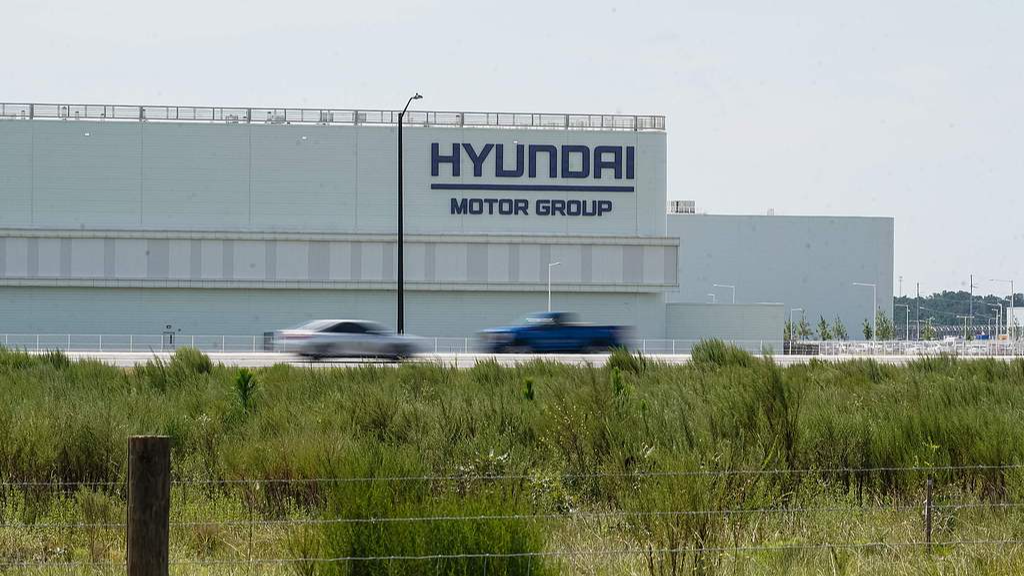
The 2.5% decrease in total global sales (976,219 units) suggests a broader "cooling period" in the automotive industry, exacerbated by geopolitical uncertainties. Domestic sales in South Korea fell 4.4%, while international sales dipped 2.1%. To solve the resulting profit gap, Hyundai is clearly banking on its hybrid lineup to bridge the transition toward full electrification. The 14.2% growth in this segment suggests an "efficiency hedge" that protects the company’s market share while it navigates the high-cost environment of tariff-laden exports. The budgetary challenge now lies in optimizing the 817,153 units sold outside Korea to ensure that localized production—like the Georgia plant mentioned in the report—can eventually offset the 30.8% profit decline currently caused by cross-border trade barriers.
Looking ahead to the rest of 2026, the company’s ability to recover its 23.6% net income loss will depend on the "cycle time" of its localized manufacturing shift. The solution to tariff-driven volatility is a deeper, full-value-chain deployment within target markets, mirroring the strategies seen by Chinese automakers this year. If Hyundai can maintain its high-frequency hybrid growth while stabilizing its operating margin back toward the 7% to 8% range, it will remain a dominant force. However, with the domestic and global demand imbalance showing a 4.4% and 2.1% reduction respectively, the focus must stay on high-margin electrified units to sustain the "flying truck" momentum of its global logistics and sales network.
News source: https://peoplesdaily.pdnews.cn/business/er/30051975453